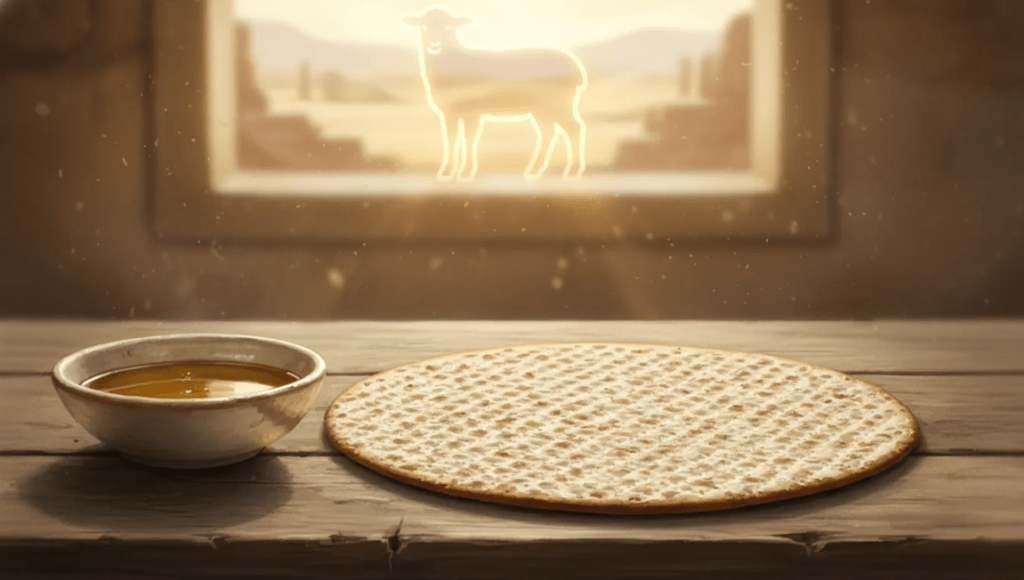
There is something both simple and serious about the Bible’s picture of worship. God does not tell His people to “go through the motions.” He gives feasts for a reason: to make the past unmistakably real, to train the present, and to point the future toward Christ.
In Deuteronomy 16 , Moses focuses on the Feast of Passover and how Israel is to remember God’s redemption from Egypt. But the deeper story does not stop in the Old Testament. The New Testament teaches that the Passover was always pointing toward something greater: Christ Himself . As Paul puts it, “Christ our Passover was sacrificed for us” (1 Corinthians 5:7).
Leaven, sin, and the point of the Lord’s table
Before Deuteronomy 16 even starts, Paul gives the theological “lens” for how God wants Christians to respond after they come to the table.
In 1 Corinthians 5, Paul says believers should “purge out the old leaven” so they can live as a “new lump” . Why? Because Christ our Passover has been sacrificed.
Paul’s conclusion is not “therefore, feel safe in your sins.” His conclusion is, “Therefore, let us keep the feast… with unleavened bread of sincerity and truth” (1 Corinthians 5:8).
If leaven is a picture of sin , then the Christian life after the Passover fulfillment is meant to be a life that is not characterized by sin. That matters, because Paul warns that treating the Lord’s table like it’s meaningless or harmless is not the gospel response.
Deuteronomy 16: What God required of Israel
Moses is speaking to a new generation headed into the land. In Deuteronomy 16, God lays out His instruction for major feasts. He summarizes, but he assumes Israel already knows the detailed commands from Exodus, Leviticus, and Numbers.
The Passover section (Deuteronomy 16:1-8) includes a repeated emphasis: Israel must eat in a way that matches the meaning of redemption. The key themes show up immediately:
- No leaven with the Passover
- Seven days of unleavened bread
- Remembrance of the Exodus (not as trivia, but as worship)
- Worship is centered (in the place God chooses)
Three feasts, one purpose: worship God, remember God, rejoice in God
Deuteronomy 16 sits inside a larger framework. God’s yearly feasts are not random religious calendar events. They have multiple purposes, and they all support one big mission: keep Israel centered on God.
These feasts are designed to:
- Provide times for worship through offerings and gifts brought to the central sanctuary.
- Remember redemption from Egypt generation after generation.
- Recognize God as provider , especially through harvest-related celebrations.
- Drive joy in the presence of God. Worship is not meant to be grim and reluctant.
- Support Scripture reading and instruction (the gathered people are taught).
- Maintain unity so Israel does not become merely tribal.
- Confirm covenant allegiance as God’s people commit themselves again.
The Feast of Passover and Unleavened Bread: name, time, and meaning
1) The name tells you what to remember
The festival is called Passover and it is also called Unleavened Bread . The Bible treats them as one unified celebration lasting seven days.
Jewish tradition even ties the festival to the idea of “spare” and “unleavened bread.” The point is the same: God’s people remember deliverance.
2) The timing is connected to redemption
In Deuteronomy 16, Israel observes the feast in the month of Abib , tied to the time God brought them out of Egypt. This is not “whenever.” God anchors remembrance to the calendar so it stays vivid.
The structure goes like this:
- The Passover lamb is killed on the 14th day of Abib.
- The next day begins the unleavened bread week, including a Sabbath rest.
- Unleavened bread continues for seven days.
- Another holy Sabbath is observed at the end of the seven-day period.
This rhythm matters, because it becomes part of how the New Testament connects Christ’s work to the Passover pattern.
3) The redemptive history: blood that protects
The first reason Passover exists is not agriculture, not pageantry, and not feelings. It exists because of what God did in Egypt.
Passover points to the night God sent the tenth plague. Death came, but God provided a way of protection: the blood of the lamb applied to the household doorposts meant death would “pass over” that home.
That is the heart of it. The Passover was about God’s deliverance and God’s protection for those who trusted His word and acted accordingly.
4) Unleavened bread: remember haste and remember affliction
Israel ate unleavened bread because they left Egypt in haste. They did not have time to prepare bread with leaven.
But Moses also calls unleavened bread “the bread of affliction.” Leavenless bread becomes a reminder of slavery: you were helpless, and God rescued you.
So even the details of what they ate carried worship meaning. The food was not an afterthought. It trained memory. It trained humility. It trained gratitude.
The agricultural and ceremonial layers: God provides, and worship must be centralized
The Passover is tied to harvest theology. In Leviticus 23, the timing includes a sheaf of firstfruits offered to God after the Sabbath that begins the unleavened bread period. That offering emphasizes that harvest is not merely a natural process. It is God’s provision.
The ceremonial instructions also highlight two major points:
- Central sanctuary worship : once Israel is in the land, the Passover is observed in the place God chooses , not scattered home rituals.
- God dictates worship : the “where” and “how” are given by God, not invented by people.
This is why the Passover in the wilderness was more household-based, but in the land it becomes a pilgrimage festival. God wants His people together, not just spiritually fragmented and tribal.
Passover fulfilled in Christ: why Paul and John say the same thing
The New Testament does not treat the Passover as an optional religious memory. It treats Passover as a divinely designed shadow of Christ.
Jesus kept Passover and showed its meaning
Jesus was faithful to the laws appropriate to Him, and His life is repeatedly set in the context of the Passover season.
- His early life includes Passover pilgrimage and Scripture teaching.
- His ministry repeatedly intersects with Passover moments in Jerusalem.
- John’s Gospel repeatedly places key events around Passover.
When Jesus teaches about spiritual life, He uses bread and life imagery that fits the Passover backdrop. And when Jesus institutes the Lord’s table, Christians see a new covenant fulfillment that still connects to the Passover logic of sacrifice and deliverance.
Paul closes the argument: Christ is the Passover
Paul makes it plain: the fulfillment is not the ceremony itself. It is Christ . In 1 Corinthians 5:7, Paul says “Christ our Passover was sacrificed for us.”
So Christians do not look at Passover and only say, “What a meaningful tradition.” They look and say, “God was pointing to the reality of salvation in Christ.”
From Passover to the Lord’s table: why the feast continues, but changes
There is a transfer here.
Israel had to eat the Passover and celebrate seven days of unleavened bread. Christians do not observe the Passover meal in the same way. But God has given the Lord’s table as the covenant meal for the new covenant people of God.
The Lord’s table is not meaningless. It is a command, and it is meant to produce a transformed pattern of life.
What changes
- There is no longer a requirement to observe Passover three times a year in the old ceremonial form.
- The symbols point to Christ’s sacrifice as already accomplished.
What does not change
- God still requires remembrance.
- God still requires faith that expresses itself in obedience.
- God still requires “unleavened” living, because sin is not compatible with covenant fellowship.
“Purge out the old leaven”: easy believism is not Paul’s gospel
One of the most challenging parts of this teaching is the practical application. Paul’s logic is not: “Since Christ died, sin doesn’t matter.”
Paul says, because Christ is our Passover, believers are supposed to respond by purging sin and living “in sincerity and truth.” The feast is meant to change you.
That is why Paul warns that taking the Lord’s table wrongly can bring severe judgment. The meal is not a spiritual prop you use while keeping your life unchanged.
In other words, Paul’s warning cuts against “easy believism.” Believing some facts about Jesus while continuing in patterned sin is not what the Passover-to-table logic is designed to produce.
God’s invitation and God’s warning: believe and apply the blood
In the original Passover, it was not enough that God had provided a plan. People had to trust it and obey it. They had to apply the blood to the household doorposts.
The New Testament message follows the same structure:
- God provided salvation through the sacrifice of Christ.
- But you must receive it by faith.
- That means repentance and obedience to the gospel.
- Otherwise, you do not experience the protection God promised.
Christ has “passed over” the path of death for His people, but the benefit is not automatic. It is applied through faith.
Looking ahead: 50 days and the next feast
The Passover feast sets the stage for what comes next in God’s calendar. The timing is significant: about 50 days after the first grain harvest, another major redemptive event unfolds in Scripture. The pattern moves from deliverance to provision to God’s coming work among His people.
For now, the call is clear: remember what God redeemed, rejoice in what He provides, and live in the purity that the Passover fulfillment demands.
Practical takeaway: how to “keep the feast” now
- Don’t treat the Lord’s table casually . God means it to be serious and transforming.
- Purposely deal with sin . Leaven belongs to the old lump.
- Approach with sincerity and truth , not hypocrisy.
- Respond to Christ with repentance and faith, because Christ is the Passover sacrifice.
Passover was never just about Egypt. And it was never just about bread without leaven. It was always about God saving His people through a sacrifice that pointed forward to the one sacrifice that would truly deliver: Christ our Passover .
For Full Sermon on YouTube Click on the Following: https://youtu.be/9l5leRogrn0
For Full Sermon on Sermon Audio Click on the Following: DEUT060 – Feast of Passover
 Grace Reformed Baptist Church