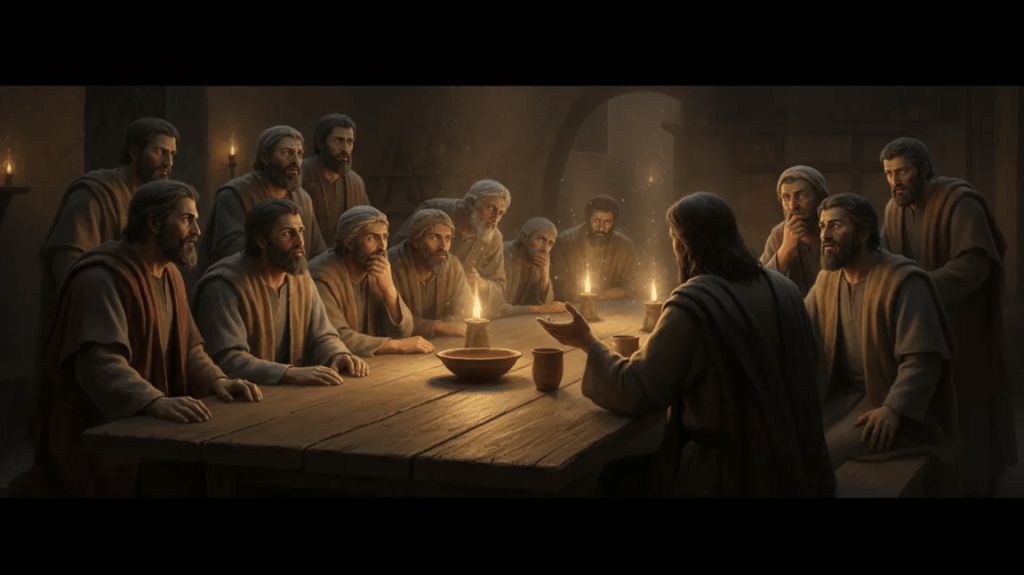
Right before Jesus is arrested, He gathers His disciples for final instructions. It is not a casual moment. The weight of the cross is near, betrayal is about to happen, and Satan is actively hunting for weaknesses. And yet, in Luke 22, you can still feel how easy it is for people to drift into the wrong priorities.
The disciples hear what is coming, but their minds are not fully awake. They start wrestling over who is the greatest. That is where Jesus meets them: not with harsh condemnation, but with teaching, correction, and a picture of what true greatness actually is.
1) The Prediction of Betrayal: God’s Plan Is Certain, Yet Judas Is Still Guilty
Luke 22 begins with an announcement that shocks the room. After Jesus speaks of the cup and the new covenant, He says that the hand of the betrayer is with Him at the table.
Two things are happening at once in Jesus’ words.
- God’s purposes are ordained. Jesus says the “Son of Man goes” according to what has been determined.
- Human beings are still morally responsible. Even though God has ordained the outcome, Jesus pronounces woe on the man through whom betrayal comes.
This is one of those places where people’s heads start to hurt. But Jesus does not try to smooth out the tension. He teaches both truths without treating them as enemies.
Divine sovereignty and human responsibility in the Scriptures
Jesus’ teaching is not an isolated thought. The same pattern appears in Peter’s preaching in Acts 2 and the early church’s prayer in Acts 4.
In Acts 2, Peter describes Jesus being delivered by God’s “determined purpose,” “counsel,” and “foreknowledge.” In Acts 4:27, the prayer says that Herod, Pilate, the Gentiles, and the people of Israel gathered together to do what God’s “hand and purpose determined before to be done.”
So the message is not that God compels evil like a puppeteer. The message is that God rules history so completely that even wicked choices end up fulfilling His plan.
What “free will” means without making it imaginary
One helpful way to think about it is this: free will is choosing without coercion . Judas chooses because that is what his heart desires. Pilate chooses because he wants his own outcomes too. No one is forcing them like robots.
At the same time, God uses those free, wicked decisions to accomplish what He has ordained for redemption. That is why the Bible can hold together:
- God’s sovereignty over the plan
- Judas’ guilt for the betrayal
There is comfort here, especially when trials feel meaningless. God is not surprised by betrayal, suffering, or injustice. But that does not erase human responsibility. Treason is still treason.
2) Strife Among the Disciples: “Greatest” Means the Person Who Serves
After Jesus predicts betrayal, Luke tells us the disciples argue among themselves about which of them should be considered the greatest.
That is spiritually stunning. The clock is ticking toward arrest, and they are still jockeying for status. Jesus responds with a gentle but direct rebuke: the world defines greatness by dominance, but God defines greatness by service.
The Gentile model: lordship from above
Jesus contrasts His disciples with the leadership style of “kings of the Gentiles.” Those leaders exercise authority in a way that dominates people and calls that domination “beneficence.” In other words, they label themselves “helpful,” but their methods are still control.
Jesus’ point is not subtle. People who reject Christ often end up craving the power to command others. They may advertise it as protection, safety, or public good. But it still tends to function as domination.
The kingdom model: greatness as humble service
Jesus says, “It shall not be so among you.” Then He gives the definition:
- “He who is greatest… let him be as the younger.”
- “He who governs… as he who serves.”
- “For who is greater, he who sits at the table or he who serves?”
- “Yet I am among you as one who serves.”
The disciples are acting like greatness is proximity to honor. Jesus teaches it is proximity to servanthood.
Jesus shows what He means in John 13
This theme becomes unforgettable when you connect Luke 22 with Jesus’ actions in John 13. Jesus rises from supper, takes a towel, and washes His disciples’ feet.
That is the visual sermon: the Lord of glory stoops and serves His creation. If you want to learn greatness, you learn the posture of service.
A church reveals its priorities by what people do
Here is a searching question Jesus’ teaching implies: if a congregation is full of people who want to receive but never serve, what does that say about what “greatness” means to them?
Jesus’ instruction is practical. Instead of asking, “How do I get to the top?” believers are trained to ask, “How can I serve in my role?” That is how families are shaped, leadership is exercised, and the church stays healthy.
3) The Promise of the Kingdom: From Their Failures to Their Faithfulness
Jesus does not crush the disciples and leave them there. He rebukes them, but He also strengthens them.
Luke 22 shifts from failure to faithfulness. Jesus says they have continued with Him in His trials. Because they have stuck with Him, He appoints them a kingdom.
This kingdom promise connects to a bigger biblical picture: Christ’s reign is not imaginary, and the kingdom is not only about some future heavenly mood. Jesus’ authority extends to the nations.
Kingdom authority and territory
“Kingdom” has at least two senses in Scripture:
- Royal power (the act of ruling)
- Territory (the area ruled)
Jesus receives authority from the Father, and then He extends it to His disciples. Revelation 2 echoes Psalm 2 by saying that overcoming and faithful endurance leads to authority over the nations.
But the key is how that authority is exercised. Jesus does not describe conquest as tanks and cannons. He describes gospel mission as spiritual rule.
So the kingdom grows through:
- preaching the Word
- making disciples
- teaching people to live under King Jesus
- applying spiritual authority through gospel obedience
Fellowship at the table
Jesus also promises intimate fellowship: eating and drinking at His table, even while He is no longer physically present.
That fellowship is meant to shape the disciples’ endurance. The cross is coming, but the relationship with Christ is not ending. Christ sends His Spirit, and fellowship continues.
What This Passage Teaches Us to Do Now
Luke 22 is not merely information about what happened at the Last Supper. Jesus’ instructions aim at priorities, motives, and faithfulness.
1. Beware of “visible betrayal” inside the visible company
One disciple betrays Jesus from within the fellowship. The warning is sobering: belonging outwardly does not guarantee loyalty inwardly.
If betrayal is living deception, falsehood, and hypocrisy, repentance and the new birth are not optional. They are the difference between staying in Christ and drifting away.
2. Redefine greatness
In the kingdom, greatness looks like:
- humility
- service
- leadership that strengthens others
- faithfulness in your role
Christ is the model, not the dominating leaders of the world.
3. Stay faithful even when you fail
Jesus knows the disciples mess up. He still promises them a kingdom because they “continued with” Him.
Faithfulness is often more useful than flash. You can be gifted and still be ineffective if you are unreliable. Jesus elevates the faithful.
4. Trust God in suffering without excusing evil
Trials do not mean God is asleep. God’s plan is certain. And yet evil remains evil, and accountability remains real.
That combination is meant to produce endurance and hope, not paranoia and despair.
Conclusion: Greatness Starts with Serving the King
Luke 22 places the disciples at a crossroads. Betrayal is coming. Pride is already present. Confusion is swirling.
Jesus answers all of it by pointing them back to Himself. In His kingdom, greatness is not status. It is servanthood. And the way to “rule” is not domination by force, but gospel mission under King Jesus.
Think like Christ. When the world defines power as control, Jesus defines power as humble service that leads people into the life of the kingdom.
For full Sermon on YouTube click the following link: https://youtu.be/J3XGL2qrtrg
For full Sermon on Sermon Audio click the following link: Luke 055 – Christ Instructions to His Disciples | SA Dashboard
 Grace Reformed Baptist Church