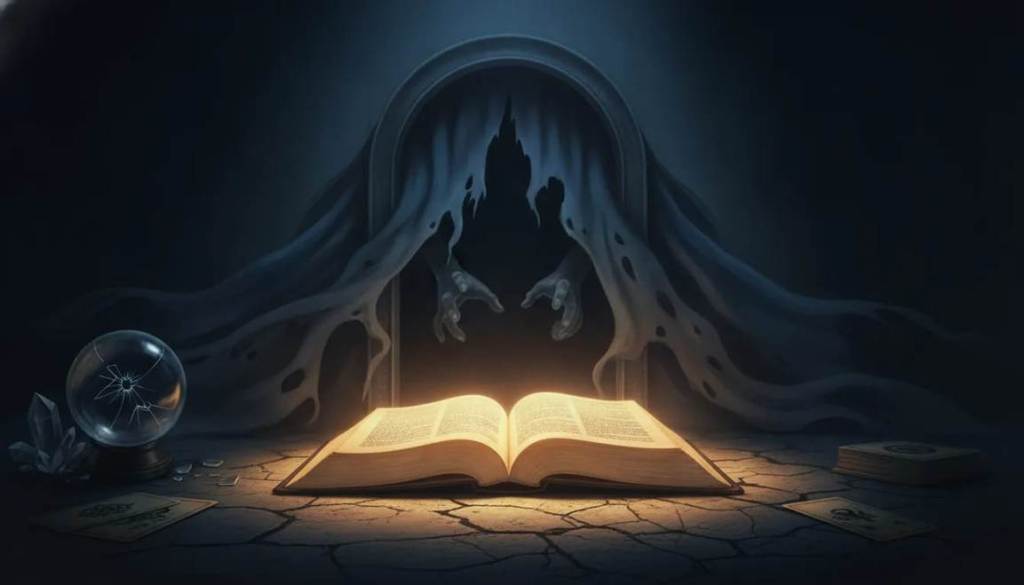
Deuteronomy 18 gives one of the clearest biblical warnings against occult practices. If you have ever wondered what Scripture says about divination, mediums, sorcery, omens, or contacting the dead, this passage answers it directly.
The core message is simple: God forbids His people from seeking hidden knowledge, spiritual power, or guidance through occult means. Instead, they are to receive truth from what God has revealed.
This matters far beyond ancient Israel. The same basic temptation still exists today. People still want quick answers, secret knowledge, spiritual experiences, and certainty about the future. The methods may look modern, but the issue is the same.
What is the occult according to the Bible?
In biblical terms, the occult includes practices that try to uncover hidden things or gain spiritual knowledge apart from God’s revealed truth. The word “occult” is commonly used for what is secret, hidden, dark, or mysterious.
Deuteronomy 18 treats these practices as more than superstition. It presents them as a false way of seeking revelation. In other words, they are an alternative source of guidance that competes with God.
That is why the passage does not frame occult activity as harmless curiosity. It frames it as rebellion.
What does Deuteronomy 18 say about the occult?
Deuteronomy 18:9-14 warns God’s people not to imitate the religious practices of the surrounding nations. The passage specifically forbids a range of occult activities and says those things are an abomination to the Lord.
That word is strong on purpose. It means these practices are detestable to God, not spiritually neutral and not something to treat lightly.
The passage also gives two reasons for the prohibition:
- These practices are morally offensive to God.
- They bring God’s judgment.
The text contrasts pagan methods of getting guidance with God’s own appointed means of revelation. The point is not just “avoid strange rituals.” The point is “do not seek truth where God has not told you to seek it.”
Why occult practices are forbidden in Scripture
1. They seek knowledge apart from God
Divination is an attempt to gain information about the future, the unknown, or hidden realities through forbidden spiritual means. It says, in effect, “What God has given is not enough. I want more.”
That is a direct challenge to God’s authority and sufficiency.
2. They are tied to false worship
In the Old Testament, occult practices were not isolated hobbies. They were part of pagan religion. They were connected to idol worship and false gods.
Other biblical passages treat false worship as spiritually dangerous and demonic in nature. That helps explain the severity of the warning in Deuteronomy 18.
3. They train people to trust the wrong source
The issue is not only what someone does once. It is also what someone learns to depend on. When people turn to omens, spiritists, or magical practices for answers, they are training themselves to trust guidance outside God’s Word.
That habit reshapes the heart.
What counts as divination?
A simple definition of divination is this: trying to discover the future or hidden knowledge through occult means.
That can include attempts to know:
- What will happen next
- What decision to make
- Why something is happening
- What spiritual forces are at work
- What the dead supposedly want to say
In the ancient world, this often involved rituals, omens, objects, altered states, or spirit contact. The outward form varied, but the goal stayed the same: get hidden information through unauthorized spiritual channels.
Occult practices listed in Deuteronomy 18
Deuteronomy 18 names several kinds of forbidden practitioners. Some of the exact Hebrew terms are difficult to translate with precision, but the overall meaning is clear: God forbids every form of occult guidance.
Child sacrifice or passing children through the fire
The passage begins with one of the most horrifying practices in pagan religion: making a son or daughter pass through the fire. This is commonly understood as child sacrifice, though some have argued it may also refer to a ritual ordeal involving danger to obtain an omen.
Either way, the practice is presented as deeply wicked.
Divination
This is a broad term that can cover many methods of seeking hidden knowledge. Ancient examples included using ritual objects, interpreting signs, or attempting to gain answers from ceremonial acts.
Interpreting omens
This refers to reading significance into signs, events, or natural phenomena. In the ancient world that might include things such as unusual occurrences, patterns, or symbolic observations that were treated as messages about what to do next.
Sorcery or witchcraft
This category includes magical practices used to manipulate outcomes or gain power. The ideas often overlap with spellwork, curses, ritual formulas, and other attempts to control people or events spiritually.
Enchantments or spells
These practices appear connected to spoken formulas, whispered rituals, or verbal techniques meant to influence spiritual forces.
Mediums and spiritists
These are people who claim contact with spirits and present themselves as channels of supernatural information. Scripture forbids consulting them.
Calling up the dead
This is commonly known as necromancy. It involves trying to communicate with the dead in order to gain information, direction, or power.
Examples of occult methods connected to divination
The broader biblical context includes examples of how ancient peoples practiced divination. These examples help show the range of things God was forbidding.
- Reading animal organs, especially the liver, to decide what course to take
- Using arrows as part of a ritual to determine direction or outcome
- Reading clouds, bird movements, or other natural patterns as omens
- Using drugs or mixtures in connection with altered states or occult experience
- Carrying charms or magical objects for protection or luck
- Consulting spirits through a medium
These may sound ancient, but the principle is current. If a practice claims to unlock hidden truth, spiritual control, or future knowledge outside God’s revealed will, it belongs in the same category.
Modern forms of occult practice
Many people assume the occult only refers to extreme rituals. In reality, the modern versions are often packaged as harmless, trendy, or entertaining.
Examples commonly associated with occult-style guidance include:
- Tarot card readings
- Medium readings
- Seances
- Spirit communication
- Spell casting
- Astrology used for guidance
- Charm-based protection or “good luck” objects
- Practices built around omens and signs
- Psychedelic spirituality pursued for revelation or mystical answers
The packaging may be softer now, but Scripture does not treat the substance as harmless.
Is astrology condemned in the same way?
Astrology is not named in Deuteronomy 18 itself, but it fits the same basic category when it is used to gain guidance, decode destiny, or uncover hidden truth through the stars. That is still an attempt to seek revelation apart from God.
The issue is not enjoying astronomy or observing the heavens. The issue is treating creation as a codebook for spiritual direction.
Why the Bible’s warning is stronger than many people expect
One of the clearest themes in this passage is that occult practice is not a side issue. It is treated as a serious moral and spiritual offense.
The reason is easy to miss in a culture that treats everything as entertainment. The occult is often presented as imaginative, empowering, playful, or aesthetically harmless. Deuteronomy 18 refuses that framing.
It says these practices are:
- Abominable
- Spiritually corrupting
- Judgment-bringing
- Incompatible with faithfulness to God
What about entertainment that glamorizes the occult?
This is where many people want a neat rule for every book, show, game, or story. Scripture does not provide a master list of titles, but it does give a clear principle.
If something makes occult practice look attractive, harmless, wise, or spiritually exciting, that should raise serious concern.
The difference is not merely whether magic or darkness appears in a story. The key question is how it is presented.
- Does it warn against evil?
- Or does it invite fascination with it?
- Does it expose darkness?
- Or does it make darkness feel charming and safe?
That is especially important when thinking about children and teenagers. Repeated exposure can normalize what God condemns.
How people drift into occult thinking
Deuteronomy 18 warns not to “learn” these practices. That word matters. It points to a gradual process.
People often drift into occult thinking like this:
- Exposure through friends, entertainment, trends, or curiosity
- Familiarity as it starts to seem normal
- Comfort with the imagery, language, and ideas
- Openness to trying “just a little”
- Dependence on non-biblical spiritual guidance
That pattern is one reason the warning is so direct. The danger is not only the final step. The danger starts when the heart becomes teachable in the wrong direction.
Does the Bible give an example of someone consulting a medium?
Yes. One well-known example is King Saul consulting the medium at Endor in 1 Samuel 28. Saul sought supernatural guidance after the Lord did not answer him in the way he wanted.
The story illustrates a crucial point: when a person rejects God’s authority yet still wants answers, the temptation to seek forbidden guidance grows stronger.
That is often how occult interest works. It thrives where there is fear, uncertainty, impatience, and refusal to submit to what God has already said.
Can occult practice bring judgment?
According to Deuteronomy 18, yes. The passage explicitly connects these abominations with God’s judgment on the nations in the land.
Later biblical history shows the same pattern. Kings of Israel and Judah who embraced mediums, witchcraft, and related practices were condemned, and those sins were part of the larger rebellion that brought severe judgment.
The lesson is clear: occult practice is not a harmless private interest. It is a form of spiritual defiance with real consequences.
What should Christians seek instead of occult guidance?
The biblical answer is not “live without guidance.” It is “seek guidance where God has appointed it.”
That means:
- Trusting God’s revealed Word
- Refusing hidden or secret alternatives
- Being content with what God has made known
- Using biblical wisdom rather than mystical shortcuts
A major temptation behind divination is the desire for certainty. People want fast answers to questions like:
- What should I do?
- What will happen to me?
- Why is this happening?
- How can I avoid pain?
Scripture redirects that desire. It teaches trust, obedience, and submission instead of spiritual shortcut-taking.
A practical test: am I seeking guidance outside God’s revealed will?
You do not need to be using obvious occult tools to have the same heart problem. A helpful question is this:
Am I looking for direction in a way that bypasses what God has already said?
That can happen through explicit occult practice, but also through a broader habit of wanting extra revelation, private certainty, or spiritual validation that does not come from God’s truth.
That is one reason discernment matters so much. Not every influential voice is a trustworthy one. Guidance that is detached from God’s truth is never neutral.
Common mistakes people make with this topic
“It’s just for fun.”
Scripture does not treat forbidden spiritual practices as harmless entertainment.
“It’s only ancient Israel’s rule.”
The passage reflects God’s moral opposition to occult practice, not merely an outdated cultural preference.
“I’m not really believing in it.”
Even casual experimentation can dull discernment and normalize what God forbids.
“I only want insight, not power.”
Divination is still condemned even when the goal is information rather than control.
“All spiritual paths have something to offer.”
Deuteronomy 18 does not allow that idea. It draws a sharp line between God’s truth and pagan alternatives.
How to respond if you have been involved in occult practices
If this topic is personal for you, the right response is not denial or panic. It is repentance and a clean break.
A wise response includes:
- Renounce the practice
- Stop seeking guidance from it
- Remove related tools, objects, or materials
- Turn to God’s truth instead
- Do not keep a foot in both worlds
Acts 19 gives a striking picture of this kind of break, where those who practiced magic publicly abandoned it. The pattern is clear: when truth takes hold, occult dependence is not managed. It is forsaken.
How to think about children and the occult
Children do not need occult material to understand that evil exists. What they need is moral clarity, not fascination.
Helpful questions for parents include:
- Does this story make forbidden spiritual power look admirable?
- Does it train curiosity toward darkness?
- Does it blur the line between danger and delight?
- Would this shape a child to avoid the occult or to explore it?
The safest principle is straightforward: do not feed attraction to what God condemns.
Key takeaway from Deuteronomy 18
Deuteronomy 18 does not merely say, “avoid a few strange rituals.” It teaches a much deeper truth.
God’s people must not seek guidance, power, or hidden knowledge through occult means.
The issue is ultimately one of trust. Will you seek truth from God, or from a rival source? Deuteronomy 18 answers that question without ambiguity.
Reject divination. Avoid mediums and spiritism. Refuse what glamorizes witchcraft and occult power. Do not learn those ways. Seek wisdom where God has made it known.
For full sermon click on the following link: https://youtu.be/bH8Yf1StjuM

