Deuteronomy 19:14 gives a short but weighty command: Israel was forbidden from moving a neighbor’s boundary marker. At first glance, this may sound like a narrow rule about ancient farmland. In reality, it addresses theft, covetousness, neighborly love, livelihood, justice, and the proper limits of authority.
The principle is straightforward: do not take what God has entrusted to another person. A property boundary is not merely a stone in the ground. It represents a person’s lawful possession, means of support, family inheritance, and ability to carry out responsibilities before God.
What Does Deuteronomy 19:14 Mean?
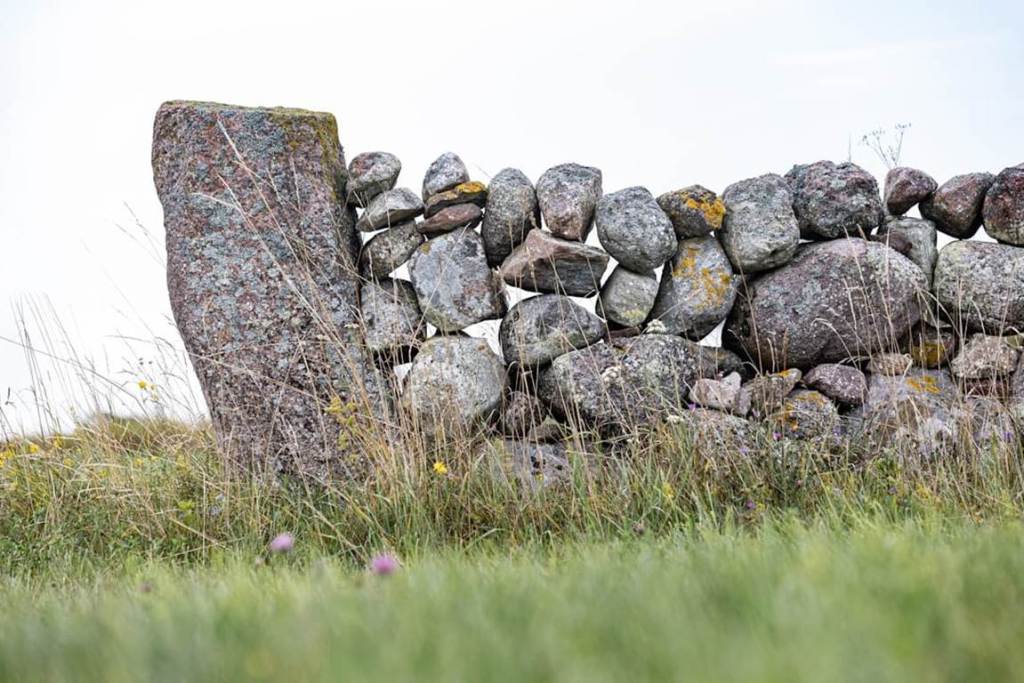
Deuteronomy 19:14 prohibits removing a neighbor’s landmark, or boundary marker. In the ancient world, land boundaries were commonly marked with securely placed stones, piles of rocks, or other visible indicators. Moving one of those markers altered the apparent property line.
That act was not harmless. A person could shift a marker gradually, perhaps only a small distance at a time, and unlawfully gain part of a neighbor’s field. On a large tract of land, a small adjustment could mean a substantial loss.
The command therefore protects people from a particular form of theft: taking land through secrecy, deception, or force rather than openly stealing an object.
In simple terms, the law teaches:
- Respect your neighbor’s property line.
- Do not claim land that is not yours.
- Do not use deception to gain an unfair advantage.
- Protect rather than diminish your neighbor’s lawful possessions.
Why Were Landmarks So Important in Israel?
Land was essential to life in an agricultural society. A family’s field was not just an investment or a luxury. It was a source of food, work, shelter, security, and inheritance for future generations.
Taking a person’s land could threaten that person’s ability to provide for a household. Removing a landmark was therefore more serious than an ordinary property dispute. It could damage a family’s livelihood and leave vulnerable people at risk.
Israel’s land distribution also carried covenantal significance. The land was ultimately God’s, and it was allotted among tribes and families as an inheritance. The boundaries were not to be treated as flexible opportunities for the greedy. They were to be honored as part of God’s providential ordering of the community.
That is why Scripture repeatedly treats the removal of landmarks as a serious offense:
- Deuteronomy 27:17 places a curse on the person who moves a neighbor’s boundary marker.
- Job 24:2-4 includes moving landmarks among the oppressive acts of wicked people.
- Proverbs 22:28 warns against removing ancient boundaries established by previous generations.
- Proverbs 23:10-11 connects boundary theft with exploiting the fields of the fatherless.
- Hosea 5:10 compares Judah’s leaders to those who remove landmarks and warns of divine wrath.
Is Moving a Boundary Marker a Violation of the Eighth Commandment?
Yes. The clearest connection is to the eighth commandment: you shall not steal. Moving a landmark is theft because it takes property that belongs to another person.
However, biblical ethics does not stop at the obvious act of physically moving a stone. The wider principle applies to any deliberate attempt to gain another person’s property through dishonesty, manipulation, trespass, or misuse of power.
Examples of property theft by deception may include:
- Misrepresenting the condition of a vehicle, home, business, or other item being sold.
- Failing to disclose information that would materially affect a buyer’s decision.
- Creating a false impression about an item’s value, condition, title, or legal status.
- Selling property while concealing debts, claims, or obligations tied to it.
- Using a position of trust to exploit another person financially.
A person does not need to break into a house to steal. Fraud and concealment can violate the same moral principle.
How Does Property Relate to Life and Human Dignity?
Deuteronomy 19 appears in a larger section that addresses the protection of life, including laws about manslaughter, false witnesses, warfare, and unsolved murder. This raises an important question: why does a law about land appear in a section so closely connected to the sixth commandment, “You shall not murder”?
The answer is that property and life are closely connected. Human beings need lawful possessions in order to live, work, provide, build households, and fulfill their responsibilities. A farmer needs land to farm. A carpenter needs tools to work. A family needs a home and resources to sustain itself.
When a person loses the means of earning a living, the loss can be devastating. Taking a farmer’s land or a tradesman’s tools can cripple that person’s ability to support a family. Theft is therefore not only an attack on possessions. It can become an attack on a person’s welfare, dignity, and livelihood.
From this perspective, property is part of humanity’s calling to exercise responsible dominion in God’s world. People are not merely consumers of resources. They are created to cultivate, build, create, provide, and serve others.
Does the Bible Support Private Property?
The law of landmarks assumes that individuals and families can lawfully possess land and other goods. One person’s field was not another neighbor’s field, and no one had the right to erase that distinction for personal gain.
This does not mean people may use property selfishly or without regard for others. Scripture repeatedly requires generosity, honesty, mercy, and justice. Private ownership is never permission for greed, exploitation, or neglect of those in need.
Still, the command not to move a neighbor’s landmark makes an important point: love for a neighbor includes respecting what belongs to that neighbor.
A biblical view of property includes both rights and responsibilities:
- People should be able to possess lawful property.
- People should not steal, damage, trespass upon, or devalue a neighbor’s property.
- Property should be used responsibly, productively, and with love for others.
- Families should be able to provide for their needs and pass on lawful inheritances.
- Those with resources should not use their advantages to oppress the poor or vulnerable.
The Sin Behind Boundary Theft: Covetousness
Moving a landmark begins before the marker is moved. It begins in the heart with covetousness.
The tenth commandment forbids desiring a neighbor’s house, field, servants, animals, or anything else that belongs to a neighbor. Covetousness says, “What God has given me is not enough. I deserve what belongs to someone else.”
That attitude can lead to theft, fraud, resentment, manipulation, and conflict. The person who is never content will always be tempted to cross a boundary.
Contentment is the opposite of covetousness. It does not mean laziness or a lack of ambition. It means receiving God’s providence with gratitude rather than envying another person’s blessings.
Practical ways to cultivate contentment include:
- Giving thanks for the resources and opportunities already entrusted to you.
- Refusing to measure your worth by another person’s income, home, land, possessions, or status.
- Working honestly rather than seeking shortcuts to gain what belongs to others.
- Rejoicing when others are blessed instead of resenting them.
- Asking God to expose envy before it becomes sinful action.
Modern Applications of the Law of Landmarks
Most people today do not live beside ancient stone boundary markers, but the principle remains highly practical. Respecting property boundaries means more than avoiding a land dispute.
Respect physical boundaries
Do not enter, use, dump on, cut trees from, remove minerals from, or otherwise interfere with a neighbor’s land without permission. A person’s property should not be treated as available simply because it is nearby or temporarily unattended.
Respect personal belongings
The principle applies to tools, equipment, vehicles, money, homes, business assets, and other possessions. Children also need to learn that their parents’ home and belongings are not theirs to misuse, destroy, or take without permission.
Conduct business honestly
Truthful dealing is essential. Do not conceal serious defects, manipulate information, or exploit another person’s lack of knowledge in a transaction. A contract may appear legal while still violating the moral duty to deal honestly.
Consider the effect of your actions on others
Property respect includes avoiding conduct that damages a neighbor’s land or diminishes its use. Pollution, destructive runoff, trespass, and careless misuse of adjoining land can all violate the spirit of loving one’s neighbor.
Protect family inheritance
Scripture treats inheritance as meaningful. A righteous person seeks to leave provision for future generations. Policies and practices that make it difficult for families to retain lawful possessions deserve careful moral consideration.
Can Civil Rulers Move Landmarks?
Hosea 5:10 is especially sobering because it applies landmark language to rulers. The leaders of Judah were compared to people who moved boundaries. The image warns that authorities can become guilty of the same injustice when they use power to seize, weaken, or disregard the lawful possessions of those under their rule.
Civil government has a legitimate role in administering justice and restraining wrongdoing. But government is not ultimate owner of everything its citizens possess. Its authority is limited and accountable to God.
This raises serious questions about policies that affect private property, including:
- Excessive or oppressive taxation.
- The redistribution of property through coercive means.
- Property taxes that can force owners to sell homes or land they have otherwise paid for.
- Inheritance taxes that can require heirs to sell family property.
- Government seizure of land for public projects.
- Zoning restrictions that prevent lawful and productive use of land.
Not every regulation or tax issue is identical, and prudence is needed in applying biblical principles to modern civil law. Yet the moral warning remains clear: rulers must not treat the people’s property as though it exists merely for the state’s benefit.
When authorities exceed their rightful jurisdiction, they can effectively move landmarks by taking control over what properly belongs to individuals and families.
Property Rights, Freedom, and Slavery
Property is closely related to freedom. A slave does not own himself, his labor, his time, or the fruit of his work. By contrast, a free person can responsibly possess, use, develop, and pass on lawful property.
This does not mean wealth determines a person’s value. Every human being bears God’s image, whether rich or poor. It does mean that stripping people of their rightful possessions can reduce their independence and place them under greater control by others.
Private property helps households maintain the ability to work, provide, make decisions, practice stewardship, and resist unjust dependence. It creates space for personal responsibility, family stability, and voluntary generosity.
A society that disregards property rights may promise equality or security, but it risks concentrating power in the hands of those who control resources. The biblical concern is not simply economic efficiency. It is justice, human dignity, and obedience to God’s order.
Landmarks Also Apply to Jurisdictional Boundaries
The principle of respecting boundaries can be applied beyond physical property. God has established distinct spheres of responsibility in human life, including the family, the church, and civil government.
Each sphere has real responsibilities, but none has unlimited authority. Problems arise when one institution tries to take over duties God has assigned to another.
For example:
- Families have responsibilities for raising, teaching, and caring for children.
- Churches have responsibilities for worship, discipleship, discipline, and spiritual care.
- Civil governments have responsibilities for public justice and the restraint of wrongdoing.
When the state attempts to control matters that belong primarily to families, it can move a jurisdictional landmark. When a church takes over responsibilities that belong to parents, it can do the same. Families must also avoid neglecting God-given responsibilities by handing them over to other institutions without discernment.
Respecting God-given jurisdictions helps prevent tyranny, confusion, and abdication of responsibility.
Common Mistakes to Avoid
Thinking property rights justify selfishness
Property rights do not cancel the command to love your neighbor. Ownership should be paired with generosity, justice, honesty, and good stewardship.
Thinking theft only involves physical objects
Fraud, false advertising, dishonest contracts, concealed defects, and abusive power can all become forms of theft.
Thinking covetousness is harmless
Covetousness is often the hidden root beneath conflict and exploitation. It should be addressed in the heart before it produces outward sin.
Thinking civil authority has no limits
Government is ordained by God, but it is not God. It must exercise authority within its proper jurisdiction and pursue justice rather than exploit those it governs.
Ignoring your own boundaries while criticizing others
It is easy to notice governmental overreach, dishonest businesses, or greedy neighbors. The law of landmarks also calls for personal examination. Are you respecting the property, responsibilities, and legitimate boundaries of people around you?
Key Takeaway: Love Your Neighbor by Respecting What Is Theirs
Deuteronomy 19:14 is about more than ancient land surveys. It teaches that taking a neighbor’s property is a serious moral wrong because property is connected to livelihood, freedom, family stability, and responsible dominion.
Do not move the landmark. Do not take by force, fraud, deceit, or manipulation. Do not envy what God has given to someone else. Instead, be content, work honestly, protect your neighbor’s rights, and use what God has entrusted to you for His glory and the good of others.
For full sermon click on the following link: https://youtu.be/8fHC-OBeWDQ

