In Luke 22, Jesus walks toward the darkest hour with a kind of spiritual clarity that almost feels unfair. While the world gathers in confusion, while plans unravel, and while courage collapses in the most predictable places, Christ keeps returning to one center point: submission to the Father’s will.
This is not just “what happened” on the road to the cross. It is a pathway to victory. The strange secret is that victory is not achieved first by strength, but by surrender. The victory is decided before the battle is finished, when the will is brought under obedience.
1) The defining moment: obedience to the Father’s will
Before trial, before the chaos of arrest, Jesus gives instructions to His disciples, and He also gives a warning to Peter. There is a sense in which Luke presents two defining moments in Jesus’ life and ministry: one at His baptism, when His public mission begins in obedience, and another here, when His earthly ministry reaches the point of no return.
Jesus is not merely “going along” with the plan. He is wrestling with the plan. And then He chooses it.
2) “Satan has asked for you”: the reality of a personal enemy
When Jesus warns Peter, He does not treat temptation like a mild inconvenience or a psychological inconvenience. He treats it like a hostile campaign against souls.
Jesus begins with emphasis: “Simon, Simon”. It is like saying, “Pay attention. The stakes are high.” And then He reveals what is happening in the spiritual realm:
- Satan has desired you
- Satan wants to sift you as wheat
This matters because it exposes a shallow view of spiritual conflict. There is a “low view of the enemy” that treats sin as if it were random, harmless, or mostly about mood. Jesus portrays something different: Satan seeks those he may devour.
And notice the texture of the warning: Satan’s tactics are not cartoonish. The goal is violent sifting, separating what is strong from what is chaff. The picture is agricultural: grain goes through a sieve that shakes until useless fragments are separated out.
So the question becomes: what does the sifting actually look like?
It looks like temptation. It looks like the enemy coming at what you already want, not what you logically “should” want. If something doesn’t match your desires, it might not tempt you. But if it matches your flesh, the same act that would be nothing to someone else becomes a trap for you.
Satan does not need horns and pitchforks. He only needs access.
3) The comfort of Jesus’ prayer: faith will not fail
Here is where Luke’s message becomes deeply pastoral. Jesus does not leave Peter with only a threat. He also gives a guarantee:
- Jesus has prayed for Peter
- Peter’s faith should not fail
- When Peter returns, he will strengthen his brethren
This is not a prayer that claims temptation will never happen. Jesus does not pray that Peter will never be tested. The prayer is about the outcome: Peter will not lose faith entirely.
There is a difference between stumbling and forfeiting. Your faith can totter, but it will not “give out.” And even if sin is involved, God’s sovereignty is strong enough to use it for His glory, without excusing the sin.
That “return” language is important too. Peter is going to stumble, and part of what Jesus is after is restoration: returning to Christ, and returning to bold strengthening of others.
4) Sincere boldness is not enough: Peter’s warning and denial
Peter responds like someone who means well. He says he is ready to go with Jesus “to prison and to death.” It is a bold confession, sincere in feeling.
But sincerity is not enough.
Jesus answers with a prophecy: before the rooster crows that day, Peter will deny Him three times.
The sting is that the denial will not happen in some grand public courtroom moment. It will happen in a small, humiliating setting, including a servant girl. Courage fails not always where the danger looks dramatic, but where it looks awkward and ordinary.
And Luke highlights a crucial failure pattern:
- Peter boasts instead of waiting
- Peter rejects Jesus’ warning
- Peter acts impulsively instead of being prayed up
When the rooster crows and Jesus looks at Peter, memory does its work. Peter remembers Jesus’ words and goes out and weeps bitterly.
5) “Watch and pray”: the strategy Jesus gives for staying intact
Jesus warns Peter to “pray” so that he does not enter temptation. This is not religious talk for a lullaby mood. It is practical spiritual defense.
There is a pattern to temptation that fits real life: you stop watching, you stop praying, and the door gets wider than you realize.
A useful way to think about it is how temptation develops:
- First comes enticement
- Then comes being drawn away
- Then comes getting pulled into a whirlpool
In calm water, you can stand. In the whirlpool, effort becomes almost useless. That is why Scripture urges early flight, early rejection, early turning.
In short: pray early, pray often, and do not assume you will “handle it” later.
6) Satan wants to scatter; Christ wants unity
The sifting imagery does not just describe personal failure. It also describes a broader spiritual strategy: separation, fragmentation, isolation.
Satan already succeeded with Judas. Now he aims to separate the rest like chaff. Scattered disciples are less able to strengthen each other.
This connects to Jesus’ later high-priestly emphasis on unity and on being “one.” The direction of Christ is always toward one purpose, one focus, one body strengthened together.
So there is a lesson for church life too: the “lone Christian” posture can be a spiritual trap. Criticizing from outside, refusing association, and treating the people of God as disposable might look like boldness. But it can function like scattering.
7) Peter’s assignment after restoration: strengthen your brethren
Jesus says that when Peter returns, he will strengthen his brethren. That is a duty inside church life, and it is also one of the most neglected ministries.
Why do people fail to do it? Pride. A proud heart prefers hiding sin rather than using restored experience to help others.
But the gospel heals pride by confession and repentance. God restores. Then believers strengthen.
That is why First Peter becomes so encouraging. Peter’s ability to comfort and teach is not based on theoretical success. It is based on real failure, real restoration, and real suffering handled by God.
David’s story gives a parallel. After a devastating fall, David does not stop with repentance. He also instructs sinners how forgiveness works. Restoration becomes instruction. Brokenness becomes a platform for care.
So the principle is straightforward: don’t let pride keep you from ministry. When you have been brought back, you can help others come back too.
8) “Two swords” and changing conditions: preparation for hostility
Luke also records a practical shift in instructions. Jesus tells His disciples that when He previously sent them, they lacked nothing because provisions were supplied. Now, conditions are changing.
He instructs them to carry a money bag, to take a knapsack, and even to buy a sword if they do not have one.
Why? Because the nation is turning.
Here Luke connects the change to Scripture. Jesus references the identity implied in Isaiah 53: He is numbered with transgressors. The religious leaders and the court of Israel will brand Him that way. And because they hate the Messiah, they will also hate His followers.
This means the disciples need to be prepared for more than polite resistance. They need readiness for real hostility.
When it comes to the sword itself, there are different interpretations, but the immediate context matters. Jesus does not teach an insurrectionist posture. He does not endorse violence as a method to build the kingdom.
Still, the idea that the sword is purely symbolic does not fit the flow of Jesus’ instructions. And Jesus’ later words about arrest show that there is a time for compliance and a time for defense, not random ear-cutting.
So the best reading is: Jesus allows for self-defense and readiness, while forbidding impulsive, lawless violence.
And even that carries a warning about motives. This is not about using weapons to overthrow governments. The kingdom advances through the word of God, not the sword of flesh.
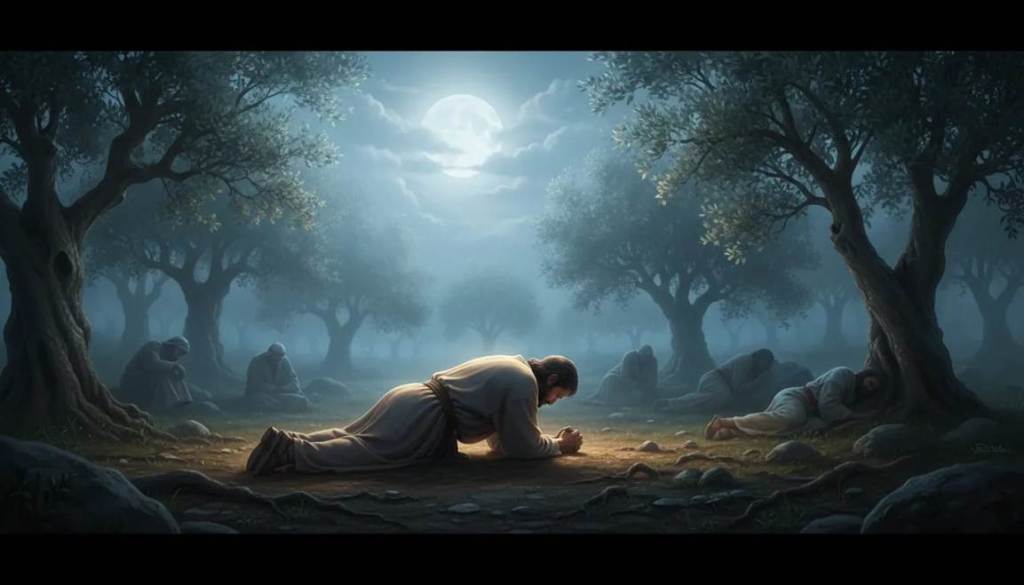
9) Gethsemane: victory through obedience, not avoidance
After preparing His disciples, Jesus prepares Himself at the Mount of Olives, specifically identified with Gethsemane. This becomes another defining moment.
Jesus has been preaching and moving through the land, but now the hour arrives. The time has come to endure the wrath of God. And what does victory look like here?
Victory looks like wrestling in prayer, submitting the will, and choosing obedience.
Jesus tells the disciples to pray that they do not enter temptation. Then He withdraws and prays:
“Father, if it is your will, take this cup away from me. Nevertheless, not my will, but yours be done.”
The “cup” language is not vague. It echoes prophetic images of God’s fury against sin. Jesus is not pretending the suffering is unreal. He is acknowledging the bitterness, the judgment-bearing reality.
That is why the scene matters for doctrine too. Jesus’ prayer makes no sense if the cross is only symbolic. The cup is judgment, and propitiation is the removal of wrath through Christ.
And then comes the decisive turn: “Nevertheless, not my will, but yours be done.” In that moment, the “victory” is already happening.
Jesus rises from prayer as a composed man. The agony drives Him to prayer, not away from God. The decision is made, and the battle is settled in the will.
That becomes the central claim of the whole message: the battle is won before it is fought when the will is brought into submission to God’s will.
10) Arrest in control: rebukes, healing, and the permission of Jesus
Luke then moves into the arrest scene. The key theme remains: Jesus is not a helpless victim losing control. He is calm, focused, and the events unfold as permitted by His decision to obey.
The arrest includes a multitude, armed involvement, and Judas’ identifying kiss. But Jesus responds with rebuke.
- He rebukes Judas for betrayal.
- He rebukes Peter when Peter swings his sword.
- He rebukes the religious leaders for coming at night with clubs and swords instead of seizing Him openly.
When Peter cuts off a servant’s ear, Jesus stops the violence, touches the ear, and heals it.
This is important for another reason too: one accusation against Jesus was that He was like an insurrectionist. Yet His actions show a kingdom that does not depend on violent revolt. The methods are distinct, because the mission is distinct.
Jesus’ kingdom is not “sourced” in worldly power. That means Christians should not interpret “not of this world” as hermit-like disengagement. After resurrection, Jesus gives authority and calls His people to make disciples of the nations.
11) Peter fails in the enemy’s camp; Christ succeeds through prayer
Luke makes the contrast sharp. Peter is in the enemy’s territory. He is close enough to be noticed, and too weak in prayer to stand.
Peter’s failure is not merely “a moment.” It is a process:
- He rejected Jesus’ warning and boasted about his own readiness.
- He failed to heed “watch and pray.”
- He acted impulsively instead of waiting for Christ.
- He put himself in the enemy’s camp without spiritual preparation.
Christ, by contrast, is also in the enemy’s camp, but He is ready because He has wrestled with God in prayer and has already decided to submit.
That is the lesson: intense battles are not meant to be entered in a weakened state. If prayerlessness and self-confidence are driving the day, failure becomes predictable.
And yet, Peter’s story is not finished at denial. The same man becomes a bold witness after Pentecost. That is part of the comfort: restored believers can do real ministry.
12) The pathway to victory: submit to the Father’s will and strengthen others
If you want the secret to victory in Luke 22, it is not hard to name, even if it is hard to live out:
- Victory begins in the will through submission to God.
- Prayer is the defense against temptation’s sifting work.
- Restoration produces ministry as believers strengthen their brethren.
Peter learned it the hard way. Jesus demonstrated it perfectly.
And the church needs that reminder today. The enemy scatters. Pride hides. Impulsiveness makes noise without wisdom. But Christ calls His people back to the Father, back to prayer, back to obedience, and back to strengthening one another.
Submission to the Father’s will is the pathway to victory. Not because it makes suffering disappear, but because it makes faith stand.
For full Sermon: https://youtu.be/U6wO5e1rnIY
 Grace Reformed Baptist Church