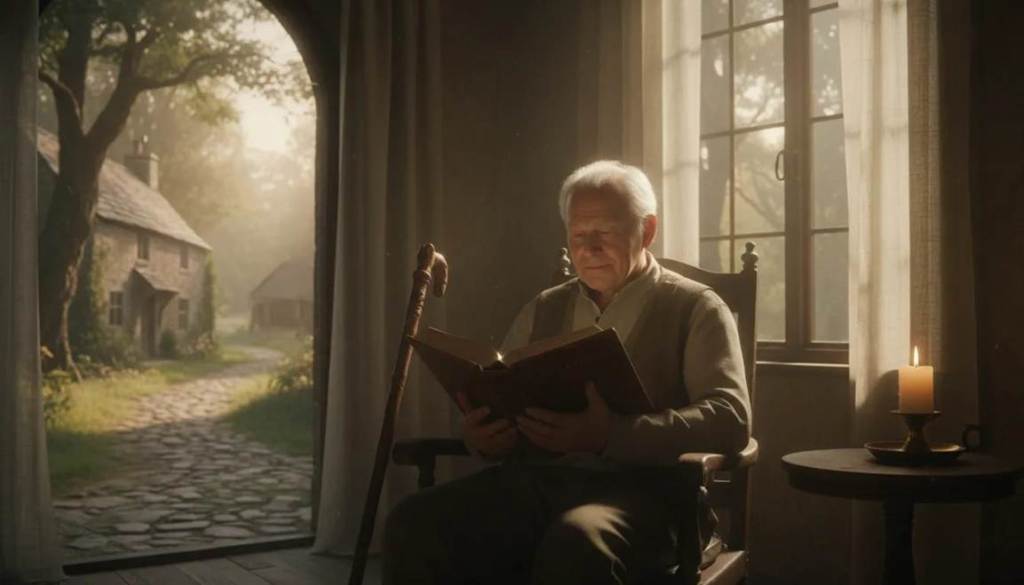
Have you ever stopped and wondered what old age is going to look like for you?
Some people are closer to it than others, of course. But even if you feel decades away, Psalm 70 and Psalm 71 press the same question into every generation: Are you preparing to live faithfully when your strength fades?
These psalms are not vague religious poetry meant for “later.” They are the prayers of a man facing real danger, real enemies, real weakness, and still trying to worship with integrity. And that makes them surprisingly practical. They teach how to respond when life gets harder, not just how to feel spiritual when life is comfortable.
Old age isn’t just a calendar. It is a spiritual battlefield.
There is a modern assumption that once you reach a certain stage of life, the spiritual tension eases. But that is not how Scripture works.
The psalms assume something different: there is an enemy, there is warfare, and it doesn’t pause because your hair turns gray.
One of the most dangerous lies believers can adopt is this: “In my younger years, I never thought about spiritual warfare much, so I guess it won’t really matter when I’m older.” If that’s the mental habit, then old age is not where you suddenly become prepared. Old age is where your earlier habits either hold you up or leave you exposed.
This is why David’s prayers matter. He does not treat old age as retirement from the fight. He treats it as another season to seek God, worship God, and declare God.
Psalm 70 and 71 belong together
Psalm 70 is short, but it is not “less important.” Many scholars have noted that these two psalms often flow together, and you can feel that unity as you read.
They share key phrases and a consistent theme: David is asking God for deliverance, even while enemies continue to press in. The setting is not fully spelled out, but David is clearly in danger in his later years, possibly during the turmoil around Absalom’s revolt.
What is consistent across the psalms is David’s posture: when something bigger than him arrives, he goes to the mighty God.
“Waiting” on the Lord is not procrastination
David’s prayers show that he is “waiting upon the Lord,” but that does not mean sitting still with anxiety and doing nothing. Waiting on God is another way of describing faith.
Faith is not passive entertainment to avoid thinking about problems. Faith is trusting God to intervene while you continue doing what you can control:
- Pray
- Worship
- Point sinners back to God
- Walk in obedience
Worship in distress: seeking God, enjoying God, exalting God
One of the most striking moments in Psalm 70 is verse 4:
“Let all those who seek You rejoice and be glad in You. And let those who love Your salvation say continually, ‘Let God be magnified.’”
That is worship under pressure.
David is facing enemies, and he still insists that God deserves magnifying, not his circumstances. The instinct of weak faith is the opposite. The instinct is to magnify whatever is attacking you. David teaches the opposite: magnify God even when life feels hostile.
As the psalm unfolds, worship shows up in three essential elements:
- Seeking God above all else
- Joy in God
- Exalting God’s name
And here is the real medicine behind this section of the psalms: worship becomes the remedy for distress.
Your flesh will resist this. The enemy will try to convince you God has abandoned you. So David’s prayers are not merely “nice religious words.” They are training for the moments when your mind is tempted to drift into fear and inactivity.
David still has enemies in old age
Psalm 70 is full of urgent language: deliver me, help me, do not delay.
But it also makes something clear: enemies do not automatically evaporate because a person becomes older.
David’s enemies are portrayed as ruthless and treacherous. Even in old age, he is dealing with threats, slander, and people who want his downfall.
This matters because modern religious life often tries to produce an experience without spiritual opposition. If a church never talks about enemies, it implicitly trains people to treat conflict as something abnormal rather than something believers must respond to with prayer.
One of David’s prayers is essentially this:
“Confound them… intervene… trip up the schemes of those who seek my hurt.”
That kind of prayer is practical. It does not make you arrogant. It does not replace responsibility. It redirects confidence away from self and into God.
And there is a warning built in: the temptation for faithless people is to let anger and pride replace prayer. David teaches the opposite order. First pray, then respond.
Humility in Psalm 71: “I am poor and needy”
Psalm 71 continues the same themes with a new emphasis: David is older, his strength is failing, and the pressure feels like it might be stronger precisely because it is harder to fight.
In verse 5 he does not posture as a self-made hero. He says, in effect: I am upheld by God. God is the source of my life, my deliverance, and my ongoing hope.
David also prays in a way that is almost startling in its humility:
“Deliver me… Be my strong refuge… For you are my hope… You are my trust for my youth.”
The point is not that David suddenly became weak in order to feel spiritual. The point is that he always understood the truth: even the strongest life is dependent on God’s sustaining grace.
God as “refuge”: safety from fear, not just from threats
Psalm 71 presents God not only as protector from enemies, but also as refuge from fear.
That distinction matters. Fear does not just threaten your circumstances. It can paralyze your obedience. The enemy’s strategy is to keep you inactive through anxiety.
So David prays, “Incline your ear… save me… be my refuge.” In other words, God is the place where distress does not get to own you.
Hope that refuses to “retire” from God
David’s old age is not portrayed as depression waiting to happen. He is hopeful.
Why? Because God has been faithful from the beginning, and David expects God to keep being faithful.
“You have upheld me from birth”
Psalm 71 includes a remarkable testimony: God has sustained him from early life. David doesn’t describe salvation as a last-minute rescue only. He frames his story in covenant terms: God’s work has been ongoing, not accidental.
That same theme appears earlier in the Psalms. David gives witness that God’s sustaining work is spiritual, not merely physical. The language includes the idea that God “makes trust” possible. In Psalm 71, that becomes a foundation for praising God continually.
This is also where a pastoral concern comes in: faith is not reducible to language or sophistication. David’s point, as the psalm is taught, is that grace can work in the heart even when a person is very young. The church’s responsibility is to encourage, train, and point toward Christ, not to treat young life as spiritually irrelevant.
Continual praise: how to keep worship alive all day long
Psalm 71 does not imagine praise as a once-a-week duty. It describes praise as continual.
“Continually” and “all the day” show up repeatedly, and they teach a rhythm:
- Pray when you feel anxious
- Give thanks consistently
- Refuse to let mood decide whether God is praised
In other words, worship becomes a daily habit, not a late-stage emergency measure.
There’s also a warning here: it is much harder to develop spiritual practices when you’re older and your routine is already shaped by years of habit. So begin now.
Train for old age now: meditating, reading, and discipling
One of the most practical parts of Psalm 71 teaching is that old age is not prepared only through physical health. Spiritual vitality must be trained while your mind is sharp and your habits are still flexible.
1) Train your mind for Scripture
The psalms model meditation, focusing thought, and applying truth. It is not about emptying your mind. It is about filling your mind with God’s words so your thoughts can be governed when fear arrives.
Reading good biographies of faithful saints and learning from long-tested Christians are also presented as part of preparing for the seasons ahead. The goal is spiritual usefulness, not spiritual entertainment.
2) Train your children for old age
Psalm 71 emphasizes generational faithfulness: what parents and grandparents teach matters. The psalm’s teaching connects to Scripture’s call for children to learn God’s ways and to carry them forward.
It also warns that influence is not neutral. Who you let shape your home, your church involvement, and your friendships is shaping your old age whether anyone admits it or not.
Do not cast off the older: honor, don’t segregate
Another major theme appears in the broader teaching on Psalm 70 and 71: the church is not supposed to amputate older believers by treating them as irrelevant.
Scripture instructs honor toward older men and older women. The aim is respectful care, patience, and a community where age groups learn from one another.
This is not just “nice.” It protects the body of Christ. Young believers need models of faithfulness that only time can produce. Older believers need purpose, belonging, and a place to serve.
Old age is still for kingdom work
Psalm 71 refuses the mindset that says, “I fought the battles already. Now I can coast.”
David shows that being older does not mean abandoning the battlefield.
Caleb at 85: wanting the hard hills
A powerful illustration is Caleb. At age 85, he does not request easy territory. He wants the mountain. He wants the fight. He asks for what earlier fear and unbelief delayed.
Caleb’s story makes a blunt point: old age does not need to become retreat. It can become renewed courage.
Fruit in old age
Scripture also describes righteous people continuing to bear fruit in old age. The claim is not that everyone will remain physically strong, but that faithfulness in God’s house produces spiritual flourishing.
Comfort and ease might not be immoral, but the danger is abandoning the dominion mindset. The battlefield gets quiet when believers stop believing they still have assignment.
Praying when strength fails: do not be far, do not forsake
As Psalm 71 moves toward its later verses, David’s tone shifts toward urgency mixed with confidence.
He prays:
- Do not cast me off
- Do not forsake me when my strength fails
- Do not be far from me
- Hasten to my help
Why such confidence? Because David ties God’s help to God’s reputation. If God brought him this far, God should not abandon him when weakness increases.
And David’s hope is not passive. He believes that when God restores strength, it enables continued service and endurance.
So how should you prepare for old age?
Psalm 70 and Psalm 71 do not treat preparation as a retirement strategy. They treat it as spiritual training for continued faithfulness.
Practical preparation looks like this
- Prepare now for warfare by practicing prayer and obedience while you are still young.
- Practice worship in distress so magnifying God becomes an instinct, not an emergency response.
- Keep praising “all day long” by developing daily habits of prayer and thanksgiving.
- Train your mind through meditation on Scripture, reading, and focused thought.
- Train your family by living the faith in front of them, not merely instructing them.
- Honor older saints instead of segregating them, so the church stays whole.
- Refuse a retirement mentality and continue participating in God’s kingdom work.
If old age is coming, it will come regardless. The real question is whether it will find you shaped by faith or surprised by weakness.
David’s answer is clear: you do not wait for old age to start worship, obedience, and courage. You build those habits now, because your future self will be living with whatever training you choose today.
May the church raise up more “Calebs.” Not people who chase comfort, but people who still want God’s kingdom, still resist fear, still trust the Lord as refuge, and still pursue the work of the gospel with steadfast joy.
For full Sermon: https://youtu.be/miRL44z59Z4

